


Andy Baker plans to meet up with the former X Factor judge after the pair met during her morale-boosting trip to Afghanistan. The pair were introduced at an award presentation at Camp Bastion and met again a barracks dinner. New man? Soldier Andy Baker caught Cheryl Cole's eye during her moral-boosting trip to Afghanistan and he hopes to take her out for dinner They posed for several photos together and once Cheryl returned home, she said she planned to give her 'gorgeous soldier' a call. Buff: It's easy to see what attracted the singer to Andy, known as Bagsy to his friends Andy, 25, who is known as Bagsy to his peers, plans to meet up with her once he returns home. His brother-in-law Graham Peck told the Daily Mirror yesterday: 'Andy would love to take Cheryl out for dinner when he’s back in the UK. 'He thought she was absolutely lovely, and really gorgeous – I think all the guys did. “Andy contacted me through Facebook, raving about Cheryl and even made a photo of them his profile picture. 'They met up a couple of times during her trip and hit it off.' But the Girls Aloud star may have to wait until next month as Andy has no mobile phone service until October 1. Graham added: 'When Bagsy read that Cheryl was planning on ringing her mystery soldier, he panicked because he’s not allowed to have his phone on for another nine days – it’s military rules. 'He wants her to know that he’ll be in touch the moment he lands, and wants her to wait for him. Andy’s a great guy and keeps himself fit in the gym.' Popstar to soldier: Cheryl was seen wearing army fatigues with her surname embroided on the pocket of her shirt Andy, of Colchester, Essex, sports an enviable six-pack and has a tattoo sprawling from his left wrist and across his chest. He serves with the tough 3 Commando Brigade, the Royal Navy’s amphibious infantry and has been in the Marines for four years. Andy is currently based in the Marines’ Logistics branch and earns about £29,000 a year, compared with Cheryl's ex husband Ashley Cole's £90,000 a week. He is also apparently a keen footballer. One of the troops: Cheryl with a group of servicemen during her visit to Afghanistan After her trip, Cheryl said: 'Not only are the soldiers incredibly brave, a few were incredibly cute. There was a bit of banter with a couple of the lads and yes, a few flirted I think. 'I came back with a phone number from one lad, although I think his talking to me was a dare. 'I think I am going to call him this week and let’s see what happens. I’m sure he’s not expecting us to, but that’s why it’ll be funny.'
Border Watch Headline Animator

Friday, 23 September 2011
This is the buff soldier who exchanged numbers with Cheryl Cole.


Palestinian leader Mahmoud Abbas makes UN statehood bid

Dowler lawyer pursues US legal action against News Corp
The solicitor who represented the family of Milly Dowler in their phone-hacking claims against News Corporation on Friday announced he has teamed up with US lawyers with a view to initiating proceedings targetting Rupert Murdoch and his son James. Mark Lewis of Taylor Hampton has instructed Norman Siegel, a New York-based lawyer who represents 20 9/11 families to seek witness statements from News Corp and directors including the Murdochs in relation to allegations that News of the World staff may have bribed police. He says he intends to assess whether he can launch a class action against News Corp using American foreign corruption laws, which make it illegal for US companies to pay bribes to government officials abroad. "There is a provision within US law, before you start an action to seek depositions from individuals, in this case, such as James Murdoch and Rupert Murdoch and other directors of News Corp," said Lewis. He added Siegel would examine allegations of not just police bribery but also phone hacking and "foreign malpractices." The move will be a fresh setback for News Corp which has been trying to insulate itself against contagion from the UK phone-hacking scandal that has engulfed its British publishing empire. Separately, it emerged that this week US prosecutors at the Department of Justice have written to Murdoch's News Corporation requesting information on alleged payments made to the British police by the News of the World. The DoJ is looking into whether the company may have violated the Foreign Corrupt Practices Act (FCPA). Under FCPA laws, American companies are banned from paying representatives of a foreign government to gain a commercial advantage. The decision to co-ordinate legal efforts on both sides of the Atlantic comes just days after News International confirmed it was in settlement talks with the parents of the murdered 13-year-old schoolgirl. News International is discussing a total package of around £3m including a personal donation from Rupert Murdoch of £1m to a charity of the Dowler's choice. News Corp declined to comment but it is understood that senior executives question whether there is any basis for Lewis's actions.
Spain’s central bank reported this week that things were getting worse for that country’s banks
Spain’s central bank reported this week that things were getting worse for that country’s banks — but not because they held a lot of Greek debt or bonds issued by other troubled European economies. The problem, instead, is the same old one. With Spain’s economy weak and home prices falling, bad loans are growing. And the central bank thinks things are getting worse. In a surprisingly frank presentation to investors in London on Tuesday, José María Roldán, the Bank of Spain’s director general of banking regulation, said that Spanish land prices had fallen about 30 percent from the 2007 peak, adjusted for inflation, and that home prices were off about 22 percent. “In both cases, we expect further corrections in the years to come,” he said. For land prices, he said, the bank’s “baseline scenario” was that prices would fall to little more than half of the peak level. The “adverse scenario” indicated that the decline could be significantly worse. That was a significant change from a presentation he made in February. Then, with home prices down about 18 percent from the peak, he argued that the decline was similar to past cyclical downturns and that prices were likely to begin rising soon. Remarkably enough, collapsing home prices have not left Spanish banks holding large amounts of bad mortgage loans, thanks largely to the fact the Spanish mortgage market operated during the boom in far different ways than the American market. But if lending to home buyers was conducted in a far more prudent manner than it was in the United States, lending to real estate developers and construction companies was, if anything, more irresponsible. The higher land prices went, the more eager the banks were to push out loans. The story of how Spain’s banks got into the mess — and the way its mess differs from that of American banks — show that it is impossible for banks to walk away from a collapsing bubble in real estate. It also shows that the structure of mortgage markets can make a major difference in how a collapse plays out. The figures released by the central bank this week showed that by the middle of this year, 17 percent of Spanish bank loans to construction companies and real estate developers were troubled — or “doubtful,” the term favored by the central bank. That figure has been rising rapidly, reflecting the deterioration in real estate values. When the financial crisis first broke out, in 2008 and 2009, it appeared that Spanish banks were in a better position than most, in part because of regulation that had kept the big banks from making some of the mistakes others made. But it turned out that smaller Spanish savings banks were heavily exposed to a real estate market that had outpaced even the United States’ market for a time during the first decade of this century. That market continued to rise after the American housing market stopped climbing. The Bank of Spain has created a program to force mergers of the smaller banks and to bring in better management. It has put about 11 billion euros into the banks to recapitalize them, and is putting in another 15 billion euros in a process that is supposed to be completed by the end of this month, said Antonio Garcia Pascual, the chief Southern European economist for Barclays Capital. But, he added, “our estimate is that the overall number needed is closer to 50 billion euros.” The banks are bleeding from loans secured by raw real estate, and from loans for construction. The pain is made worse because such lending soared during the property boom. It is those loans that are now devastating bank balance sheets, as developers who borrowed to build offices, stores and neighborhoods saw demand dry up and now cannot pay the banks back. Other corporate loans are also showing weakness, as would be expected when unemployment is above 20 percent and not expected to improve for at least two years, but less than 5 percent of those loans are said to be doubtful. There are also signs of trouble in car loans and other loans to individuals.
Wednesday, 21 September 2011
IMF cuts growth forecast for UK for 2011 and 2012
The International Monetary Fund has cut its growth forecasts for the UK, in a report warning that the global economy is in a "dangerous new phase". UK gross domestic product is predicted to grow 1.1% in 2011, down from the 1.5% forecast in the IMF's previous World Economic Outlook report in June. The growth forecast for 2012 has been slashed from 2.3% to 1.6%. Foreign Secretary William Hague said the UK had the "discipline and determination" to tackle its deficit. But shadow chancellor Ed Balls called them "deeply concerning forecasts for both the UK and world economy". Independent economists are currently forecasting average UK growth of 1.3% in 2011, slower than the IMF, and 2% in 2012, ahead of the IMF figure. The IMF's UK forecast for 2011 falls behind projections for Germany, France, the US and Canada. Germany is forecast to grow 2.7% in 2011 while France is expected to show 1.7% growth. The US should advance 1.5% and Canada 2.1%. However, UK growth in 2012 should surpass both Germany and France, whose forecasts have been cut to 1.3% and 1.4% respectively. A spokesman for the Treasury said the Government remains committed to its deficit cutting plan. He said: "It is welcome that the IMF have forecast that the UK will grow more strongly than Germany, France and the euro-zone next year. "But it is clear that the UK is not immune to what is going on in our biggest export markets, with every major economy seeing lower forecasts for growth this year and next. "The Government remains committed to implementing the deficit reduction plan which has delivered stability, a policy stance that Christine Lagarde described as 'appropriate' earlier this month." Mrs Lagarde, head of the IMF, said the UK's budget deficit stance remained "appropriate" but "the heightened risk" meant a need for a "heightened readiness to respond".
Debt Crisis Infects Companies via Bank Loan Costs
Banks in Spain and Italy are curbing loans and charging customers more as aftershocks from the sovereign debt crisis drive their own borrowing cost higher. “They can’t lend what they don’t have, I suppose,” said Francesc Elias, the owner of Bomba Elias, a pumps and filters maker near Barcelona, which shelved a 100,000-euro ($144,000) plan to open a Bahrain office when it couldn’t get an affordable bank loan. “The banks are very clever about finding new ways to charge us more.” Spanish and Italian government bond yields surged to euro- era records this quarter as Greece struggled to avoid default, driving the cost of insuring against nonpayment by the region’s banks to a record and making it harder for them to sell bonds. Spain pays 5.35 percent for 10-year money, up from an average of 4.07 percent in the first half of 2010, while Italy pays 5.65 percent compared with a 4.05 percent average last year. As a result, banks such as Banco Santander SA, Spain’s biggest lender, are passing higher funding costs on to their customers. Santander’s return on Spanish loans rose to 3.63 percent in June from 3.37 percent in December, as the yield it pays on deposits fell to 1.32 percent from 1.54 percent. UniCredit SpA, Italy’s biggest lender, said on Aug. 3 it’s being more selective about who it lends to and levying higher rates. One out of three companies asking for credit in the second quarter period didn’t get it or obtained less than they asked for, according to Confcommercio, an Italian retailers’ lobby group. ‘Increasingly Stringent’ “The cost of financing our current activities has increased significantly,” said Riccardo Illy, chairman of Italian coffee maker Gruppo Illy SpA. “We don’t have any problems accessing credit because we’re large enough, but we know many businesses that are having trouble because banks’ requirements have become increasingly stringent.” Spanish banks including Santander and Bankia SA are shrinking their loan books after being pummeled by a collapse in credit demand for real-estate and surging loan defaults. Santander’s Spanish lending shrank an annual 7 percent through June, mirroring a trend in the Bank of Spain’s data that show a 1.9 percent annual drop in lending to companies and individuals. Lending at Bankia, the third-biggest lender formed from a merger of seven savings banks, was down 2.3 percent from December. The average interest rate on new company loans of as much as 1 million euros rose to 4.70 percent in July from 4.57 percent in June and 3.88 percent in December, according to the Bank of Spain. Companies took out 15.9 billion euros of those loans in July, down from 18.7 billion euros in the same month a year ago and 39.2 billion euros in July 2007, according to the central bank. ‘The Bottom Line’ “In our case, it’s not so much the issue of access to credit that’s the problem, it’s the fact that it costs more,” said Luis Zapatero, chairman of Bodegas Riojanas, a Spanish winemaker, which needs to finance putting wine aside to create reserve vintages that may not go on sale until several years after bottling. “Our financial costs have increased 15 percent and that goes straight to the bottom line.” Banks face a dilemma when trying to pass on increased funding costs in full because they risk driving more borrowers into default, said Barclays Capital’s Pascual. Bad loans in the Spanish banking system are near 7 percent of total lending, the highest since 1995. Increased Caution “Banks are more cautious in giving long-term loans because it has become more difficult to transfer increasing funding costs to customers,” said Giovanni Bossi, chief executive officer of Banca Ifis SpA, an Italian bank specializing in short-term loans to companies. As lending slides in Spain and banks struggle to finance themselves, the outlook for growth is worsening, said Antonio Ramirez, an analyst at Keefe Bruyette & Woods in London. Prime Minister Jose Luis Rodriguez Zapatero said Sept. 14 that Spain might miss its 1.3 percent growth target this year because of the “situation of financial tension and economic uncertainty, mainly because of Greece.” Banks, meantime, are struggling to sell bonds. The last benchmark-sized issue of 1 billion euros or more of debt by a Spanish bank was a sale of public-sector covered bonds by Santander in June. UniCredit paid a record spread for Italian covered bonds when it raised 1 billion euros from a sale of 10- year notes that yielded 215 basis points more than the benchmark mid-swap rate. ‘Negative Feedback Loop’ “It’s the negative feedback loop between what’s happening to the sovereign and the effect on banks and the economy,” said Antonio Garcia Pascual, chief southern European economist at Barclays Capital in London. “To a large extent, the problems facing Spanish lenders also apply to Italy.” As financing costs rise in Italy, analysts have started revising down their growth estimates for that country. Nomura International Plc economists revised their Italian gross domestic product growth estimate for 2012 last month to 0.5 percent from 0.8 percent previously. “The increased financial costs will become more evident in the dynamics of the economy,” said Giada Giani, an economist at Citigroup Inc. in London. “I definitely think that the deterioration of financial conditions is a key factor in the macro-economic picture.” A survey by Spain’s national statistics institute published in May showed that one in every four companies that sought loans in 2010 failed in the attempt, compared with 10 percent in 2007. Half of the companies surveyed said they’d been able to line up the credit needed, compared with 80 percent in 2007, according to the survey. Meanwhile, Spanish banks are also demanding higher fees from customers, Bank of Spain data show. The average six-month charge for a retail customer current account jumped 15 percent to 25.80 euros at the end of August from 22.36 euros in December, according to the regulator. “There’s a double effect because commissions have also increased dramatically,” said Elias, the owner of the pumps and filter maker, who has cut his workforce to 12 from 20 in the past year. “It affects any kind of investment plan.”
Saturday, 17 September 2011
Central control of Europe's borders proposed
The European Union's executive branch proposed Friday that national borders in Europe's visa-free travel zone be controlled by officials in Brussels, the EU capital, rather than by individual governments -- a plan already opposed by Germany, France and Spain. The proposal by the European Commission follows a call for stronger economic governance within the area that uses the euro currency, and reflects a push toward more centralized decision-making to protect the European Union's two proudest achievements, the free movement of both people and capital. It is unclear at this point whether either of those achievements will survive, said Paul de Grauwe, an economics professor and EU expert at the Catholic University of Leuven, in Belgium. "I would say we are at a road, and suddenly there is a bifurcation and we have to make choice," de Grauwe said. "One road is more integration to save the project, to save the Schengen zone and the monetary union. But there is a lot of opposition. It's also possible that we take the other road, no further integration, and then we risk the collapse of these two experiments." In June, EU leaders agreed to set up new rules underpinning the principle of free travel throughout much of the continent after Italy, Denmark and France all took action to roll back visa-free travel. Most of the details of the proposed centralized governance of the 25-country Schengen zone -- named for the town in Luxembourg where the visa-free treaty was negotiated in 1985 -- had already emerged. National governments would retain the right to re-institute border checks in unforeseen emergencies that threaten public order or internal security, but only for five days. Beyond that, approval of the European Commission and a committee of technical experts from the Schengen countries would be needed. And as a last resort, if a country failed persistently to adequately police the Schengen zone's external borders despite help from EU headquarters, the commission with the consent of the committee could impose checks along that country's borders with other Schengen countries. "It is a common European project," EU Home Affairs Commissioner Cecilia Malmstrom said of the visa-free zone. "We need to work jointly on joint projects to defend them." But there has long been a push and pull between officials who believe the European project can only work with greater integration and those opposed to the weakening of national sovereignty. Even before the Schengen proposal was unveiled Friday, it met with opposition from Germany, France and Spain, who said border control, public order and internal security were matters for national governments, not EU headquarters. Given that opposition, it is unclear whether the proposal in its current form will take effect. Meanwhile, plans to admit two more EU countries -- Romania and Bulgaria -- to the Schengen visa-free zone hit a snag Friday when Dutch Immigration Minister Gerd Leers said his country plans to block their entry. Approval of new Schengen countries must be unanimous. "The trust isn't there," said Leers' spokeswoman, Elaine de Boer. She said Leers "wants to see more work in the fight against corruption" in both countries. Bulgaria's President Georgi Parvanov insisted his country was being unfairly singled out despite meeting the criteria set out by the 17-member bloc for joining the visa-free zone. "I don't think it is right to use any other criteria in solving this matter," he said at a meeting with foreign ambassadors in the capital Sofia.
Brazil catches Irish man with gut full of cocaine
Irish man has been arrested in Brazil with almost a kilo of cocaine hidden in his gut, police there say. The 20-year-old suspect was detained as he tried to board a flight from Sao Paulo to Brussels. Officers said they became suspicious because he looked nervous. When questioned, he admitted having swallowed sealed capsules of cocaine. He was rushed to hospital, where he expelled 72 capsules containing 830g (1.8lb) of the drug. The hospital released a scan showing the man's gut filled with the oval-shaped capsules. The suspect is being held on suspicion of international drug smuggling. If found guilty, he could face five to 15 years in prison. Risk Brazil is a major transit point for smugglers moving South American drugs into Europe's lucrative drugs market. Neighbouring Bolivia, Colombia and Peru produce almost all the world's cocaine. Every year hundreds of people - known as mules - are arrested trying to smuggle the drug on international flights. As well as the danger of being caught, smugglers who hide drugs inside their bodies risk having the capsules burst, with possibly fatal consequences.
Thursday, 15 September 2011
Holloway lawyer smuggled drugs into Pentonville Prison in oversized shoes
Five people are facing years behind bars after smuggling drugs and mobile phones into Pentonville Prison – including a lawyer who stuffed illicit goods into his oversized shoes. Ritesh Brahmbhatt, 31, took phones, high-strength cannabis and the stimulant mephedrone into the prison in Caledonian Road, Holloway, in a pair of size-12 slip-ons bought from menswear store High and Mighty. The revelations come within a month of a scathing report by the prison’s independent monitoring board, which revealed a drug problem is stoking gang trouble and violence in the jail. It also emerged that a drugs counsellor from Canonbury is to stand trial next year accused of smuggling cannabis into the prison in an unrelated case. Dismissed Brahmbhatt, who was dismissed from law firm Mordi and Co in Holloway Road, Holloway, when caught, pleaded guilty to conspiracy to smuggle drugs, mobile phones and other prohibited items into Pentonville in July – but details have just emerged after his four accomplices were convicted on Friday after denying the charge. David Sterling, 28, of Mallory Close, Bromley-by-Bow, Desmond Brown, 27, of Montague Road, Leytonstone, Brown’s girlfriend Danielle Porter, 24, of Saltern Court, Barking, and Calvin Chance, 26, of Birch Grove, Leytonstone, were convicted at Blackfriars Crown Court following a trial. Rufuz D’Cruz, prosecuting, said: “Ritesh Brahmbhatt entered into a crude criminal conspiracy to smuggle prohibited items into prison with his clients, Sterling and Brown, who at that time were serving prisoners, and Chance and Porter.” Mr D’Cruz said he abused his position of trust and “chose to routinely undermine the rule of law”. The gang was snared after a prison officer spotted his suspiciously high number of legal visits – 15 between February and September in 2009. He was caught with a mobile phone, earphones, a pair of electronic scales and a small quantity of mephedrone, or “meow meow”, in his right shoe and 25g of high-strength “skunk” cannabis in his left, while a further 80g of cannabis was stuffed down his trousers. The lawyer intended to pass the contraband to inmate Sterling, who was wearing a full-length Muslim robe. Two more mobile phones – which can fetch up to £1,000 each inside – were discovered in his jail locker and an envelope with £300 of cash. Police found text messages and financial information linking the five, while several phone calls and visits were known to have taken place. Nearly £20,000 passed through bank accounts belonging to Brahmbhatt, Porter and two others. The five defendants have been remanded in custody awaiting sentencing. A Prison Service spokesman said: “We are working hard to keep contraband out of prison, using a range of security measures to reduce drug supply, including working closely with police forces and carrying out random mandatory drug tests.”
Aussie Poker Pro David Saab Gaoled For Drug Smuggling
Professional poker player David Saab from Victoria in Australia faces a lengthy period away from the game after being convicted of smuggling 14.6kg of cocaine into the country. The drugs, which had an estimated street value of AU$6.5 million (£4.22m) were hidden inside agricultural machinery imported from Canada. Saab was convicted alongside fellow players Darren Francis Hughes and Robert Alan Remeeus; he faces 14 years in prison while his accomplices both received 8-year sentences. The highlight of Saab’s poker career was his victory in the Manila leg of the Asian Poker Tour in 2008, a win which netted him $280,000. He has also appeared on tv screens in Britain, when he participated in a heat of the UK Open. He came 46th in the Main Event at the 2008 World Series of Poker. His total live tournament earnings amount to more than $550,000. Sentencing Saab, Judge Liz Gaynor said: “It is clear that you were the principal organiser in Australia of this importation and would derive the most benefit from it.”
Briton arrested for drug smuggling
Customs and Excise officers at Soekarno-Hatta International Airport have foiled an attempt to smuggle 6.5 kilograms of crystal methamphetamine (shabu-shabu) worth Rp 13 billion and arrested a British national. The head of the Customs Office, Oza Olivia, said the suspect was identified as Gareth G.D, 32, who flew from Istanbul, Turkey and arrived at the airport with Turkish Airlines on Tuesday evening. “Members of our tactical unit conducted profile analyses of passengers at Terminal II-D and began to suspect him of carrying illegal items,” she told reporters on Wednesday. Oza said officers were suspicious and decided to search the suspect’s luggage. They found the drugs hidden inside the luggage. The suspect, a construction worker in his home country, later confessed that he received an order from a Turkish man, whom he identified as A, to transport the drug to Jakarta and was promised US$1,000 when the delivery was made. Oza claimed that by intercepting the drug delivery, her agency managed to prevent thousands of youths becoming drug addicts. She also said that in collaboration with the National Narcotics Agency, the Customs Office is still investigating the case. Drug smuggling attempts through the country’s main international gate continues to rise despite the threat of the death penalty. Drug smugglers can be charged under Article 113 of the 2009 Law on Narcotics, which carries a possible death sentence.
Tuesday, 13 September 2011
DEA Bans Synthetic Cocaine Masked As Bath Salts
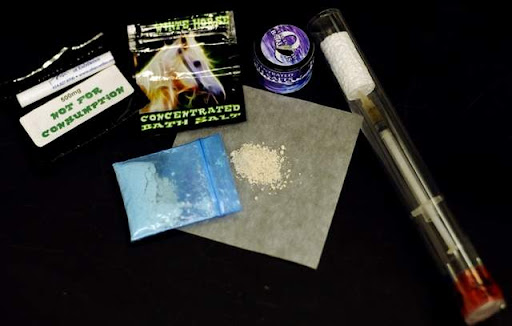 The U.S Drug Enforcement Agency's war on drugs continues with a nationwide ban of synthetic cocaine. Labeled as bath salts, the hallucinogenic drug has become more available in the Grand Junction area as part of a trend seen across the country. In response to increased emergency room visits, the federal agency has moved to emergency control these synthetic stimulants. This action makes it illegal to possess or sell Mephedrone, Methylenedioxypyrovalerone (MDPV), and Methylone or any products containing them for the next year. These chemicals are most often found in forms of 'legal ecstasy' or 'legal cocaine.' During the temporary ban, the DEA will team up with the U.S. Department of Health and Human Services to further study whether these chemicals should be permanently banned. In June, we introduced you to these bath salts in this article. Back then, they were an unregulated drug taking the place of recently banned synthetic forms of marijuana. "It is actually like a synthetic cocaine slash methamphetamine," Jim Schrant with the DEA told us at the time. "So, it's really the worst of both." The bath salts sell at a price of $40 per gram. They are mainly sold at smoke shops. But, in June, Schrant told us that his agency could not find any local dealers. Today, there are at least two. "They're putting it into packaging which is pleasing to the eye with market names of "Blue Dreams," things like that," Schrant said. "And, they're intentionally trying to target that young adult crowd." As part of this emergency control, businesses and citizens have 30 days to get rid of the banned products. At that time, the DEA will publish a Final Order in the Federal Register making the drugs Scheduled 1 substances. That category is the harshest and is reserved for unsafe, highly abused chemicals with no known medical use in the U.S. Violating that law is punishable by jail time. Employees at smoke shops in the area tell us that synthetic cocaine isn't that popular. But, local high school students have heard all about it. "I don't think they care if it's legal," Grand Junction High School freshman Hannah Rady said of some of her classmates. "Nobody does." Just like K2 and Spice, bath salts are labeled "not for human consumption." But, these students say that is not stopping anyone and neither is the law. "People just ask me 'Have you done spice before?' I'm just like, 'No,'" GJHS freshman Emilio Lazcano said. He knows Governor John Hickenlooper made those forms of synthetic marijuana illegal starting July 1, but he says fellow classmates continue to tell bother about it. "They're like 'Oh, well you're supposed to smoke it like this and that,' and I'm like 'Oh, well cool. I'm not really into that stuff.'" "They tell us that it doesn't make their eyes red, so it's way easier to bypass by your parents," GJHS junior Joe Gedscad added. The most common symptoms of these synthetic stimulants include impaired perception, reduced motor control, disorientation, extreme paranoia, and violent episodes. The DEA says the long-term physical and psychological effects are not known but potentially severe. Including Colorado, 33 states have already taken action to control or ban other synthetic stimulants. Most states pass these laws after the DEA files an emergency control on certain chemicals.
South London men face furniture drug smuggling charges
Six men have gone on trial accused of conspiring to smuggle more than £2.5m of cocaine into the country. Kevin Hill, 27, of Cartmel Gardens, Morden, Wayne Smith, 19, of Westmoreland Way, Mitcham and Carl Charles, 33, of Yorkshire Road, Mitcham, face charges of attemtping to import 13.5kg of the drug. Three other men Craig Hughes, 35, from Orpington, Conrad Crandon, 55, from Edmonton and Terence Tremblett, 32, from Brixton, also face the same charge. The offences date back to October and November, in 2009, when border agency officers at Tilbury Docks, in Essex, flagged up a container holding a number of items of wicker furniture and brush mats. After closer inspection, the jury heard, the officers found the brush mats had been injected with cocaine which, when separated, came to a total of more than £2.5m. Simon Wild, prosecuting, told the court that a respectable removal firm, called Grants of Cheam, based in Coomber Lane, Croydon, had allegedly received a phone call from a Keith Thompson in late October, 2009, who said he wanted to store a shipment. Grants of Cheam, unknowingly, agreed to take on the shipment but they did not hear from Mr Thompson for two weeks, the court heard. On November 10, 2009, Mr Thompson allegedly arranged for the furniture and mats to be delivered and they arrived that day. There followed a series of arrests after the items had reached Croydon and all six men were charged with conspiracy to smuggle, which they all deny. The trial, which started at Croydon Crown Court on Wednesday (September 7), is expected to last three weeks.
Illegal alcohol find ‘one of the UK’s largest seizures’
A QUARTER of a million pounds worth of illegal alcohol has been seized in a raid in Glasgow. Officers from HM Revenue & Customs (HMRC) took the illegal alcohol and dismantled an alcohol relabeling factory after a two-day operation and have claimed the seizure is one of the largest in the UK. A Glasgow man has been charged with evasion of duty following the discovery last week.
Vicente Zambada's lawyers claim he and other cartel leaders were granted immunity by U.S. agents
Vicente Zambada's lawyers claim he and other cartel leaders were granted immunity by U.S. agents — and carte blanche to smuggle cocaine over the border — in exchange for intelligence about rival cartels engaged in bloody turf wars in Mexico. Controversial defence: Vicente Zambada's claim could throw new light on how U.S. authorities deal with Mexican drug cartels Experts scoff at the claim, which U.S. prosecutors are expected to answer in a filing Friday in federal court. But records filed in support of his proposed defence have offered a peek at the sordid world of Mexico's largest drug syndicate, the Sinaloa cartel, which is run by his father, Ismael Zambada, and Mexico's most wanted man, Joaquin 'El Chapo' Guzman. It's a world of brutality, greed and snitching, and federal agents would love to have the younger Zambada pass along more intelligence, especially if it could help bring down his family's operation or lead to the capture of Guzman, a billionaire who escaped from a Mexican prison in a laundry truck in 2001. Main man: Vicente's father Ismael Zambada, godfather of the Sinaloa cartel, pictured at a party in 1993 'It comes down to whether he would be willing to give up his dad or Guzman,' said David Shirk, who heads the Trans-Border Institute at the University of San Diego. 'Would he be willing to give up his own dad? It seems unlikely.' Zambada, 35, has rarely been seen since his 2009 arrest in Mexico City, after which Mexican authorities paraded him before TV cameras in a stylish black blazer and dark blue jeans. His suave image was a sharp contrast to a photo of him with moustache and cowboy hat released by the U.S. Treasury Department in 2007. He may have upgraded his look after he assumed control over cartel logistics in 2008 and, federal officials say, received authority to order assassinations. Mexico's most wanted man: Joaquin 'El Chapo' Guzman, who escaped from prison in a laundry truck He was arrested and extradited to Chicago a year later to face trafficking conspiracy charges punishable by up to life in prison. The Sinaloa cartel is one of Mexico's most powerful. Named after the Pacific coast state of the same name, it controls trafficking on the border with California and is battling rival cartels in an effort to expand east along the 2,000-mile-long U.S.-Mexico border. Accustomed to luxury in Mexico, Zambada has been held in a 10ft by 6ft cell in Chicago, is often served meals that have gone cold and hasn't been outside in 18 months, his attorneys say. U.S. District Court Judge Ruben Castillo told the government on Thursday to file a response to those complaints. Armed marshals led the shackled Zambada into Thursday's hearing. He appeared at ease, even smiling and winking at a woman sitting on a spectators' bench. Castillo will decide later whether Zambada's provocative immunity claim has any credibility, but many experts said they were skeptical. 'Personally, I think it is a bunch of malarkey,' said Scott Stewart, who analyzes Mexico's cartels for the Texas-based Stratfor global intelligence company. 'I mean, what the defence is saying is that a huge amount of cocaine was allowed to pass into the United States unimpeded. 'Why would you even have sought his extradition if there was this potential backlash?" U.S. prosecutors briefly discounted Zambada's claim in one filing, but more details are expected in Friday's documents. A spokesman for U.S. Atty. Patrick Fitzgerald would not comment on the allegation. Neither would a Washington spokesman for the U.S. Drug Enforcement Agency, whose agents Zambada claims to have dealt with in Mexico. However, clandestine intelligence deals are not uncommon, and conspiracy theories abound in Mexico about the government going easy on one cartel to keep the others under control.'It comes down to whether he would be willing to give up his own dad. It seems unlikely'


Feds charge Colombian drug lord called ‘Loco Barrera’ and two partners
One of Colombia’s most-wanted drug traffickers with alleged ties to a narco-terrorist organization has been charged in Miami along with two other “high-level” partners, U.S. authorities said Monday. Daniel Barrera-Barrera, indicted in Miami on cocaine-smuggling conspiracy charges, operates mainly in the eastern part of Colombia between Bogota and the Venezuelan border. There, he maintains a partnership with the U.S.-designated terrorist group known as the FARC, composed of leftist guerrillas who allegedly play a major part in Colombia’s drug trade. The Colombian government has offered a $2.7 million reward for information leading to the capture of the defendant, aka “Loco Barrera,” who remains at large. In March, the Treasury Department designated Barrera-Barrera, 42, as a “specially designated narcotics trafficker,” because of his significant role in the international drug trade. In Miami, Barrera-Barrerra was charged with two brothers, Javier Fernandez-Barrero, 43, and Orlando Fernandez-Barrero, 45, who are known as “Los Gorditos.” They are in custody awaiting extradition to Miami. FBI Special Agent in Charge John Gillies said their “criminal enterprise is responsible for distributing tons of cocaine into the U.S and other countries.” Over the past year, U.S. and Colombian governments have opened up a new front in the war on drugs, zeroing in on emerging groups such as Barrera-Barrera’s that have competed to replace the once-powerful drug cartels in Medellín, Cali and the North Valley of Colombia, which authorities say have been largely dismantled. A new team of prosecutors has joined the FBI, Drug Enforcement Administration and Immigration and Customs Enforcement agents, in an alliance with Colombian investigators, to go after so-called bandas criminales, or criminal groups. So far, the U.S. has indicted more than 150 defendants in Miami as a result of that initiative, U.S. Attorney Wifredo Ferrer said. Earlier this month, Ferrer, his office’s chief of narcotics, George Karavetsos, and DEA Special Agent in Charge Mark Trouville flew to Colombia for an unprecedented meeting with that country’s president and attorney general to announce U.S. indictments filed against more than 50 leaders and associates of the bandas criminales.
Friday, 9 September 2011
Gale-force wind warnings issued
Hurricane Katia could bring gale-force winds across the Atlantic to Scotland by Monday, forecasters have warned. The hurricane, which is moving from Bermuda, is expected to result in stormy weather and gusts of up to 75mph, although no official severe weather warnings have yet been issued. Forecasting provider Meteogroup said it is still too early to predict the effect the hurricane would have on the country's weather. Forecaster Andy Ratcliffe said: "By the time it gets across the Atlantic, it will be the remnants of Hurricane Katia. "We're still a little uncertain on the exact track of its path, although it looks like the centre of depression will be in the vicinity of Scotland." Meteogroup has forecast winds of 60mph, or possibly 75mph in some areas, accompanied by spells of heavy rain. Katia is the second major hurricane of the 2011 Atlantic hurricane season and was rated as a category four hurricane on the Saffir-Simpson hurricane scale at its peak. The scale rates hurricanes from one to five, with five being the strongest
Malaysian and Nigerian drug smugglers are using Thais as accomplices
Malaysian and Nigerian drug smugglers are using Thais as accomplices, judging by the two latest drug busts by police with a total haul of 89 slabs of ganja with a street value of RM180,000. In the first case on Tuesday night, police arrested two Malaysians and a Thai at Bandar Sri Damansara after finding 60 slabs of ganja hidden in an altered floor board and front bumper of a Toyota Crown belonging to one of the suspects. In the second case yesterday morning, two Nigerians and a Thai woman were picked up at a petrol station in Jalan Duta. Police seized 29 slabs of ganja stashed in two backpacks. "Over the past three months, we detained other Nigerian drug smugglers who were also accompanied by Thai girlfriends-cum-accomplices," said Federal Narcotics Crime Investigation Department director Datuk Noor Rashid Ibrahim. SECRET STASH: Some of the 60 slabs of ganja seized by police hidden inside an altered front bumper of a Toyota Crown "It appears the Nigerians have a new modus operandi of flying to Thailand first and then coming here via land routes with Thai accomplices. From June to last month, we also arrested 13 Nigerians for attempting to smuggle drugs when they landed here at the Kuala Lumpur International Airport (KLIA) and Low-Cost Carrier Terminal (LCCT) in Sepang." In the Bandar Sri Damansara bust at 11.15pm on Tuesday, the three suspects were aged 25 to 32. "Their hiding the 60 slabs of ganja, worth RM120,000, was similar to the approach by another drug syndicate we busted last month in which 10 people were arrested at several locations in the city after we found 88 slabs of ganja, heroin and syabu stashed in altered floor boards and other secret compartments in four Mercedes-Benz cars," said Noor Rashid. In yesterday morning's bust, police received a public tip-off concerning drug peddling at petrol station in Jalan Duta. "There was a brief scuffle before we managed to apprehend both Nigerians and we also arrested the Thai woman as she's believed to be their girlfriend-cum-accomplice," said Noor Rashid, adding the three suspects were aged 28 to 41 and the 29 slabs of ganja bore a street value of RM60,000.

Hague court jails ex-Yugoslav army general
highest-ranking officer of the former Yugoslav army has been jailed for 27 years by the UN tribunal at The Hague for war crimes. General Momcilo Perisic, who served as chief of staff of the Yugoslav army during the Balkans conflict, was found responsble for murder, persecution and attacks on civilians in Bosnia and Croatia in the 1990s. The tribunal found Perisic, 67, guilty of helping Serb troops plan and carry out war crimes, including the killing of 8,000 Muslim men and boys in Srebrenica and of the 42 month-long siege of Sarajevo. Perisic was also convicted of failing to punish his subordinates for their crimes of murder, attacks on civilians, and injuring and wounding civilians during rocket attacks on Zagreb in Croatia. He was also found guilty of securing financial and logistical support for Serbs in Bosnia and Croatia. Criminally responsible "Momcilo Perisic was found criminally responsible for aiding and abetting murder, inhumane acts, attacks on civilians and persecution on political, racial or religious grounds in Sarajevo and Srebrenica," Justice Bakone Moloto said. Perisic becomes the first Belgrade official to be convicted for Serbia's role in the wars in Bosnia and Croatia, a role the regime in Serbia has always staunchly denied. The court also found Perisic bore command responsibility for the shelling of Zagreb in 1995. The tribunal found evidence that Perisic had had a "collaborative relationship" with Bosnian Serb military commander General Ratko Mladic, and "substantially aided his operations". Perisic had kept General Mladic on the Yugoslav Army payroll list, and personally signed Mladic's promotion to the rank of colonel general in 1994. Mladic is currently on trial at The Hague on charges of crimes including genocide. But the tribunal did not find evidence that Perisic had "exercised effective control" over Mladic or any other Yugoslav Army officer serving in the Bosnian Serb army. Mladic has been indicted for genocide by the Yugoslavia tribunal and was arrested in May this year.
Freed Egyptians tell of torture in Libyan jails
With drawn and gaunt faces, some 30 Egyptians holed up in a modest Libyan hotel speak of the incarceration and torture they suffered at the hands of Muammar Gaddafi’s loyalists. “They told me, ‘You Egyptians, you caused problems in your country, and now you have come to destroy ours’,” said Mahmud Abu Zeid, referring to the popular uprising that ousted neighbouring Egypt’s president Hosni Mubarak in February. “They wanted me to say that I was armed and had encouraged Libyans to rise up against Gaddafi,” he said. The 31-year-old said he was the first Egyptian to have been jailed in Abu Slim, a district of Tripoli that saw some of the fiercest fighting and worst atrocities before Gaddafi lost his grip on the capital late last month. Abu Zeid said the Gaddafi loyalists forced the Egyptians to record confessions that they had triggered the revolt against his regime, before they were eventually freed by revolutionary fighters. “For five months, they gave electric shocks to my son. I was so weak that I was unable to walk, so they dragged me like a sack,” he said, adding, “I ended up recording their message.” Under pressure he “confessed” to having used guns to encourage Libyans to call for the ouster of Gaddafi, he said, adding however that the Libyans who heard the recordings were not fooled. Abu Zeid’s account tallied with that of other refugees at the hotel in Benghazi, the rebellion’s stronghold in eastern Libya, some 600 kilometres (370 miles) from their homeland. “They gave out bread by kicking it at us, and we had a litre (two pints) of water to be shared among a dozen prisoners,” said another Egyptian man who added that he had been shot twice in the leg. It was still difficult for him to walk. Like him, other men in the hotel showed scars and burn marks on their backs they said were the result of torture. Tamer Rad, an Egyptian labourer who worked in Libya for two years, said he had been forced to to drink urine when he asked for water. “I was really thirsty. I asked for water, crying. They told me ‘You want to drink? Here!’ And they poured urine into my mouth. I was handcuffed, I could not resist so I had to drink it,” he said. The 26-year-old said the Egyptians had been stuck in Benghazi for several days and that he now had only one thought — of leaving Libya and returning to Egypt. The group said they fled to Benghazi after being freed on August 21 when anti-Gaddafi fighters broke open several jails as they overran Tripoli. And they had been unable to move on because, they said, the Gaddafi loyalists burned their travel documents and they are unable to contact the Egyptian embassy in Libya. On Monday, the Egyptian foreign ministry said the men would be repatriated on the same day, explaining that they had been forced to stay in Libya after the fall of the regime due to “insecurity on the roads” and the closure of airports.
Authorities Confirm Gun Found In Arizona Is Third At U.S. Crime Scene Tied To ATF's 'Fast And Furious'
Authorities confirm a weapon from the failed ATF program 'Operation Fast and Furious' was found at a violent crime scene in Maricopa, Ariz. in 2010. This is the latest in a series of cases where Fast and Furious guns have been linked to violent crimes across the U.S. and Mexico. The two guns found at the scene were an AK-47 and a Beretta pistol, according to the Arizona Department of Public Safety. The AK-47 is linked to Fast and Furious, according to ATF. The weapons were found inside a stolen truck in March 2010 after the driver slammed into two DPS vehicles while trying to evade members of the Arizona Vehicle Theft Task Force, ABC 15 reports. The driver, Angel Hernandez Diaz, was reportedly arrested and charged with multiple crimes, including flight from a pursuing law enforcement vehicle, aggravated assault on an officer with a dangerous instrument or deadly weapon, theft of means of transportation and misconduct involving a weapon, according to court documents. Fast and Furious was an operation launched in late 2009 by the Phoenix office of the Bureau of Alcohol, Tobacco, Firearms and Explosives to follow gun purchasers in hopes that suspects would lead investigators to the heads of Mexican cartels. But hundreds of high-powered rifles and other guns ended up in Mexico, and many now accuse the ATF and the Justice Department of letting the guns "walk" even after safety concerns were raised. Assistant Attorney General Ronald Weich said last week that three weapons linked to Operation Fast and Furious had been used in violent crimes in the U.S. Weapons linked to the program were used in a December attack along the Southwest border that killed U.S. Border Patrol Agent Brian Terry. Months later, Rep. Darrell Issa, R-Calif, launched his committee's investigation, as the Justice Department's inspector general also opened an inquiry, at Attorney General Eric Holder's direction. On Wednesday, Holder said for the first time that not only he but also other higher-ups at the Justice Department were not aware of the operation as it was being carried out. Holder also suggested politics could be a driving force behind Republican lawmakers' forceful inquiries into the matter. Recently, the man who headed ATF in the midst of it, Ken Melson, was reassigned, and U.S. attorney Dennis Burke, who oversaw the prosecution of cases coming out of the operation, abruptly resigned. At least three men have been charged in connection with the murder of agent Terry, though only one is in U.S. custody. The Justice Department recently informed lawmakers that cases coming out of Operation Fast and Furious will now be led by prosecutors from outside Arizona.
Thursday, 8 September 2011
£40m cocaine smuggling gang convicted
drugs gang responsible for smuggling cocaine with a street value of up to £40m into the UK has been convicted at the High Court in Glasgow. They were involved in importing the drugs from Spain between 2007 and 2009. The ringleaders were Keith Blenkinsop, of Annan, and Lindsay Harkins from Helensburgh. Three men who acted as mules - Andrew Burns, of Helensburgh; Robert Dalrymple, of Gretna; and James Elvin, from Clydebank - were also convicted. The cocaine was concealed inside suitcases and holdalls flown by couriers into Prestwick, Glasgow and Newcastle airports. The court heard how the drugs were concealed beneath a false bottom sewn into suitcases The court heard how the operation came to an end when one of the gang's couriers, David Harbinson, 41, of Annan, was caught with some counterfeit £20 notes and blurted out details of the drugs scheme to police. A teller at a Marks and Spencer bureau de change in Carlisle noticed the currency among a bundle of sterling he wanted to convert to euros. Mr Harbinson subsequently gave evidence against his former associates and has now been placed on a witness protection programme. He told advocate depute Iain McSporran, prosecuting, that the gang had a direct connection to Colombian drug barons. He said Blenkinsop and Harkins were the brains behind the operation while the other accused were couriers paid to take euros to Spain and bring back drugs. In fact, the gang exchanged so much sterling into euros that Blenkinsop's local post office won an award for the amount of euros it sold. The jury was told they sourced their cocaine from Colombians based in Barcelona and transferred it to Harkins' house in the Spanish city. Harkins, a former upholsterer, would then put the drugs inside a suitcase and sew in a false bottom. The cocaine brought in by the gang was mostly destined for the Glasgow area, although some of it was also sold in Dumfries. Refuted claims Mr Harbinson also gave the court a detailed breakdown of how he was approached to become a courier and the payments made to transport the drugs. All of the accused claimed that he was a liar and a self-confessed cocaine addict and said that nobody would have used him as a drugs courier. After a five-week trial Blenkinsop, 43, of Winterhope Road, Annan; Harkins, 44, of West Princes Street, Helensburgh; Burns, 56, of Old Luss Road, Helensburgh; Dalrymple, 43, of Loanwath Road, Gretna; and Elvin, 35, of Garscadden View, Clydebank, were all convicted of being concerned in the supply of cocaine in Scotland, England and Spain. Blenkinsop was also convicted of being involved in the supply of cannabis and amphetamines while Harkins was found guilty of supplying amphetamines. Dalrymple and Elvin were only convicted of being involved in the drugs operation as couriers in 2009.
Crimes by EU citizens treble but few are kicked out
27,000 crimes were committed by EU citizens in the UK last year and more than 30,000 are expected this year. And because of EU rules and human rights laws only a fraction of the criminals are removed from the country. It will fuel concerns over the impact of immigration on towns and cities, especially following the two most recent EU expansions in to Eastern Europe. Critics last night said the restrictive EU rules that prevent removals must be addressed as a matter of urgency. Dominic Raab, the Tory MP who unearthed the figures, said: “Far from helping us tackle crime, the current straitjacket EU arrangements for securing our borders, deportation and law enforcement are imposing a massive net burden on policing and prison cells.”
Wednesday, 7 September 2011
'Terrorist' Attack Hits New Delhi
Indian authorities say a terrorist attack outside the Indian high court in New Delhi killed at least 11 people and injured 66 others. Police believe the explosive was placed inside a briefcase near a main gate to the high court in New Delhi. The blast is being described as a "medium-intensity bomb." Injured were rapidly transported to area hospitals and police cordoned off the area to begin an investigation. Speaking from Bangladesh, Indian Prime Minister Manmohan Singh was quick to label the explosion an act of terror. "This is a cowardly act of a terrorist nature... All the people of India have to stand united so that the scourge of terrorism is crushed," he said. Indian Home Minister P. Chidambaram visited the bomb site and says top national investigation teams are examining evidence. "At this stage, it is not possible to identify the group that caused the bomb blast," he said. There have been no claims of responsibility. Chidambaram reminded lawmakers that New Delhi is a target of terrorist groups, especially when parliament is in session. "We shall never be intimidated by terrorist groups," he said. "We are determined to track down the perpetrators of this horrific crime and bring them to justice." In New Delhi, there have been 15 bombings since 1997. For many, Wednesday's explosion also called up fresh memories of July's serial bombing in the southern Indian commerce capital, Mumbai, which killed 20 people.
Russian jet carrying Lokomotiv of KHL crashes, 43 dead
Russian jet carrying the KHL ice hockey team Lokomotiv slammed into a riverbank moments after takeoff Wednesday, killing at least 43 people and leaving two others critically injured, officials said. Shock, Sadness Over KHL Crash The crash of a plane carrying members of KHL club Lokomotiv is being mourned throughout the NHL. ESPN.com's Cross Checks blog is taking in reaction to the tragedy from across the league. Blog • Burnside: Agent remembers Demitra Dallas Stars defenseman Karlis Skrastins, Slovakian national team captain and ex-NHL player Pavol Demitra and the team's coach, former Detroit Red Wings assistant and NHL player Brad McCrimmon, were among those confirmed to have died. The Russian Emergency Situations Ministry said the Yak-42 plane crashed in sunny weather immediately after leaving an airport near the city of Yaroslavl, on the Volga River about 150 miles northeast of Moscow. It said the plane was carrying Lokomotiv from Yaroslavl to Minsk, the capital of Belarus, where it was to play Thursday against Dinamo Minsk in the opening game of the season of the Continental Hockey League. The plane was carrying 45 people, including 37 passengers and eight crew, and two people survived the crash. The crash and resulting deaths of current and former players sent shock waves through the NHL. "Though it occurred thousands of miles away from our home arenas, this tragedy represents a catastrophic loss to the hockey world -- including the NHL family, which lost so many fathers, sons, teammates and friends who at one time excelled in our League," commissioner Gary Bettman said. "Our deepest condolences go to the families and loved ones of all who perished." Demitra, who played in the NHL for the St. Louis Blues and Vancouver Canucks, was on the plane, his agent, Matt Keator, told ESPN.com. "It's just stunning and just awful," Keator said. Keator had visited with Demitra in Russia three weeks ago. He first met Demitra when the two were with the Blues organization -- Keator as a scout and Demitra as a successful player. "You couldn't find a more popular teammate," Keator said. [+] Enlarge AP Photo/Misha Japaridze Players from Lokomotiv of the KHL were aboard a plane that crashed on the banks of the Volga River, killing at least 43. The Stars confirmed on the team website that Skrastins was among those killed. "The Dallas Stars family is shocked and saddened by the passing of Karlis Skrastins and so many other young lives in a plane crash in Russia today," Stars general manager Joe Nieuwendyk said. "Karlis was a wonderful father and husband, as well as a good friend. He will be greatly missed." Former New Jersey Devils forward Alexander Vasyunov was also among those killed, Devils general manager Lou Lamoriello told ESPNNewYork.com. Vasyunov was 23. "I don't think anybody can prepare for something like this," Lamoriello said. "It's just devastating news. Words can't express my personal feelings." "I can't say enough about him as a young man," Lamoriello said. "He certainly had talent. His whole career was in front of him." A Czech embassy official said Czech players Josef Vasicek, Karel Rachunek and Jan Marek, who was drafted by the Los Angeles Kings in 2000, were among those killed. Rachunek was also a former NHL player, having skated for the Devils, Ottawa Senators and New York Rangers. It wasn't immediately clear which other players were on board the Yak-42. Officials said player Alexander Galimov survived the crash along with a crew member. "We are only beginning to understand the impact of this tragedy affecting the Lokomotiv Yaroslavl club and the international hockey community," the KHL said in a statement. "First and foremost, our condolences go out to the families and friends of the players, coaches and staff lost in today's tragedy. "We know that there are many in the KHL family who will be grieving with us. As the investigation of this tragedy progresses we will work closely with investigators, government officials, club executives and the Yaroslavl community. We are working to find an appropriate way to honor this club and begin the healing process from the deep loss so many of us feel today. Aircraft Crashes Involving Sports Teams Wednesday's crash of a Russian jet carrying members of KHL team Lokomotiv Yaroslavl will join the list of other tragic air accidents involving sports teams. Other notable aircraft tragedies in the sports world include: Feb. 7, '58 -- Manchester United • 8 members of Manchester United were among 23 deaths from the crash of a plane taking off in Munich. Oct. 29, '60 -- Cal Poly Football • 16 football players, a team manager and a booster were killed when plane crashed on takeoff (22 others were injured). Feb. 15, '61 -- U.S. Figure Skating • 8 members of U.S. Figure Skating Team were among 72 deaths resulting from a crash of a flight to Brussels. Oct. 2, '70 -- Wichita St. Football • 14 Wichita State football players and coach Ben Wilson were among 31 who died. Nov. 14, '70 -- Marshall Football • Plane crash killed all 75 people aboard, including 37 members of Marshall football team. Oct. 13, '72 -- Rugby Team in Uruguay • Only 16 of 45 aboard ultimately survived a crash in the Andes. Dec. 13, '77 -- Evansville Basketball All 29 aboard plane died, including 14 players on the Evansville men's basketball team. Jan. 27, '01 -- Oklahoma St. Basketball • 10 people associated with Oklahoma State basketball died, including two players. -- ESPN Stats & Information "We are aware that many of you have questions. This tragedy remains our primary focus. We ask for patience as we find an appropriate way to proceed with the 2011/2012 season." International Ice Hockey Federation president Rene Fasel called the crash "a terrible tragedy for the global ice hockey community," pointing out that the team's roster included players and coaches from ten countries. "Despite the substantial air travel of professional hockey teams, our sport has been spared from tragic traffic accidents," Fasel said. "But only until now. This is the darkest day in the history of our sport." Prime Minister Vladimir Putin immediately sent the nation's transport minister to the site, 10 miles east of Yaroslavl. The plane that crashed was relatively new, built in 1993, and belonged to a small Yak Service company. Lokomotiv Yaroslavl is a leading force in Russian hockey and finished third in the KHL last year. McCrimmon, who took over in coaching Lokomotiv in May, was most recently an assistant coach with the Red Wings. He played 18 years in the NHL for Boston, Philadelphia, Detroit, Hartford and Phoenix. Red Wings general manager Ken Holland said he has known McCrimmon since the 1980s, during his playing career. "It's shocking. I think everybody in the hockey community is probably in shock and numb, myself included," Holland told ESPN.com. "He loved hockey. He was a tremendous guy and wonderful family man. Our thoughts and prayers go to his wife Maureen and two children.'' The Russian team also featured several top European players and former NHL stars, including Vasicek and Rachunek of the Czech Republic, Skrastins and defenseman Ruslan Salei of Russia and Swedish goalie Stefan Liv. The KHL is an international club league that features teams from Russia, Belarus, Kazakhstan, Latvia and Slovakia. Lokomotiv was a three-time Russian League champion in 1997, 2002 and 2003. It took bronze last season. Swarms of police and rescue crews rushed to Tunoshna, a picturesque village with a blue-domed church on the banks of the Volga River. One of the plane's engines could be seen poking out of the river and a flotilla of boats combed the water for bodies. Russian rescue workers struggled to heft the bodies of large, strong athletes in stretchers up the muddy, steep riverbank. One resident, Irina Pryakhova, saw the plane going down. "It was wobbling in flight, it was clear that something was wrong," she said. "It went down behind the trees and there was a bang and a plume of smoke." She said rescuers pulled victims' bodies out of the Volga River. "I saw them pulling bodies to the shore, some still in their seats with seatbelts on," Pryakhova said. A cup match between hockey teams Salavat Yulaev and Atlant in the central Russian city of Ufa was called off midway after news of the crash was announced by Conintental Hockey League head Alexander Medvedev. Russian television broadcast images of an empty arena in Ufa as grief-stricken fans abandoned the stadium. "We will do our best to ensure that hockey in Yaroslavl does not die, and that it continues to live for the people that were on that plane," said Russian Ice Hockey Federation president Vladislav Tretyak. In recent years, Russia and the other former Soviet republics have had some of the world's worst air traffic safety records. Experts blame the poor safety record on the age of the aircraft, weak government controls, poor pilot training and a cost-cutting mentality. President Dmitry Medvedev has announced plans to take aging Soviet-built planes out of service starting next year. The short- and medium-range Yak-42 has been in service since 1980 and about 100 are still in service with Russian carriers. In June, another Russian passenger jet crashed in the northwestern city of Petrozavodsk, killing 47 people. The crash of that Tu-134 plane has been blamed on pilot error.
20 people, including a senior army officer, were killed on Wednesday when two blasts were detonated by separate suicide bombers in southwest Pakistan
At least 20 people, including a senior army officer, were killed on Wednesday when two blasts were detonated by separate suicide bombers in southwest Pakistan, police officials said. A police officer assisted an injured man at the site of a double suicide bombing in Quetta, Pakistan, on Wednesday. The attackers targeted the Frontier Corps, a paramilitary force commanded by army officers, stationed in Quetta. At least 30 people were injured in the explosions. There was no immediate claim of responsibility but suspicion immediately fell on Al Qaeda and Taliban militants . On Monday, Pakistani officials announced the arrest of a senior Al Qaeda leader, Younis al-Mauritani from Quetta. The operation was conducted by Inter-Services Intelligence, the country’s intelligence organization, and the Frontier Corps, according to an army spokesman. The attack Wednesday morning in Quetta took place in a high-security neighborhood where several government offices and residences of high-ranking government officials are located. The attackers targeted the house of Brig. Farrukh Shehzad, the deputy inspector general of the Frontier Corps. One bomber detonated his vehicle outside the house of the officer, a witness told AAJ TV, a private television news channel. Soon after the first attack, another attacker entered the house on foot and started firing before detonating his explosives. Brigadier Shehzad was wounded and his wife was killed, according to initial local news reports. A colonel, Khalid Masood, was also killed in the attack. Local television networks broadcast images of charred vehicles as ambulances ferried the wounded to nearby hospitals. The house of the wounded brigadier was badly damaged. Quetta, the capital of Baluchistan Province, which borders Afghanistan and Iran, has a history of sectarian and nationalist violence. Al Qaeda leaders and Taliban militants are also thought to have found a safe haven in the city and the provinceReuters

Heavy gunfire in central, north Syria; 11 killed
Syrian security forces unleashed a barrage of gunfire on Wednesday, killing at least 11 people and leaving thousands cowering in their homes as President Bashar Assad's troops kept up the government's assault on a 6-month-old uprising, activists and witnesses said. Nine of the dead were in Homs, a hotbed of opposition to Assad's autocratic regime. Two others were shot dead during raids in Sarameen, in northern Syria. For days, security forces have been pursuing activists and anti-government protesters in Homs, part of a ferocious crackdown on the most serious challenge to the 40-year Assad dynasty. The UN says more than 2,200 people have died in nearly six months of protests. "All through the night, there was shooting. The gunfire didn't stop," a resident of the city said by phone on Wednesday. "I can't tell exactly what is going on because it's dangerous to go out." Omar Idilbi, a spokesman for the Local Coordination Committees, an activist network, said security forces simultaneously stormed several districts in the old part of the city, including the Bab Dreib, Bab Houd and the Bayada neighborhoods. Nine people were confirmed dead in ongoing shooting in those areas, the LCC said. The London-based Observatory for Human Rights, which has a network of activists across the country, said 10 were killed. Homs, Syria's third-largest city, has seen some of the largest anti-regime protests in Syria over the past months, despite repeated crackdowns. On Tuesday, security forces opened fire from a checkpoint in Rastan, just north of Homs, killing two people, including a 15-year-old boy, activists said. They said five unidentified corpses, including that of a woman, also were found dumped around the city centre.
US deplores 'cowardly' India bombing
The United States on Wednesday condemned the "cowardly" bombing outside a courthouse in New Delhi, and praised the courage of the Indian people "in the face of horrific violence." "The United States condemns in the strongest terms this morning's deadly bombing outside the New Delhi High Court, and extends its deepest condolences to those affected by these cowardly attacks," US State Department spokeswoman Victoria Nuland said in a statement. "The people of India have once again demonstrated remarkable resiliency and courage in the face of horrific violence," Nuland said. Nuland said the United States "stands ready to offer any and all assistance to Indian authorities," and that Washington was monitoring the situation to ensure "the safety and security" of US citizens in India. "Terrorism is a scourge that affects us all and the United States stands with India in confronting this global challenge," she added. Wednesday's powerful bomb, hidden in a briefcase, ripped through a busy crowd outside the court, killing at least 11 people and wounding dozens more. It was the first major attack on Indian soil since triple blasts in Mumbai on July 13 killed 26 people.
Mexican helicopters flying over Texas
Mexican military helicopters have been flying over Texas, a staging ground for missions into Mexico to fight drug traffickers, a Mexican official said. The San Antonio Express-News reports Zapata County Sheriff Sigifredo Gonzalez Jr. said as many as 10 of the Mexican helicopters have been spotted flying over south Texas in daylight during the past 17 months. U.S. Federal and state agencies would not elaborate on the missions, the newspaper said. But a Mexican official with knowledge of the flights said, "Yes, I can tell you they exist, they are going on -- certainly for the last couple of years." Most of the helicopters have been sighted near Falcon Lake, where Mexican authorities are battling the Zetas cartel, the Express-News said. U.S. Rep. Michael McCaul, who represents part of Harris County and is chairman of the Homeland Security Oversight and Investigations Subcommittee, would not confirm details about the flights. "It is a highly sensitive, coordinated effort to take out the cartels that has been effective," McCaul said. "Beyond that, I don't want to compromise the operations or the safety of our agents." Catherine Frazier, deputy press secretary for Texas Gov. Rick Perry, said state law enforcement officials are not told in advance of the flights. "Failure to do so stirs up unnecessary concern among local people and could result in situations of mistaken identity or friendly fire, putting our peace officers and citizens in harm's way," she said.
A Mexican death cult is fuelling America's anti-immigration backlash.
In September 2008, 11 decapitated bodies were discovered in Mexico’s Yucatan peninsula. When police arrested the killers, they found an altar in their home dedicated to Santa Muerte – the patron saint of death for Mexican drug cartels. One year later, an illegal immigrant called Jorge Flores Rojas was arrested in North Carolina for running a sex ring. He, too, had built a shrine in his east Charlotte apartment to Santa Muerte. Flores forced his girls to have sex with as many as 20 men a day while he knelt in his living room praying to the skeletal figure of death. In August 2011, the Mexican army stumbled upon a tunnel that ran right under the US border for 300 metres. It was six feet high and equipped with lights and ventilation. It also housed – you guessed it – an altar to Santa Muerte. Europeans complain mightily that Muslim immigration has introduced fundamentalism to their secular continent. Yet they tend to look upon Middle America’s fear of illegal Hispanic immigration with contempt, as if its paranoia was motivated entirely by racism. Reporting on new legislation designed to drive illegal immigrants out of the Deep South, The Guardian’s Paul Harris writes that it heralds, “The prospect of a new Jim Crow era – the time when segregation was law – across a vast swath of the old Confederacy. [The legislation] will ostracise and terrorise a vulnerable Hispanic minority with few legal rights.” Indeed it will, and that is a tragedy. But the debate about illegal immigration isn’t just about competition over jobs or lingering white racism. Many Americans share the European fear that mass migration is subverting their democratic culture from within. In the same way that exotic cells of Jihadists have established themselves in London and Paris, criminal gangs motivated by bloodlust and kinky spiritualism have been found living in the suburbs of Boston and Atlanta. One of its many manifestations is the cult of Santa Meurte. Santa Muerte is part Virgin Mary, part folk demon. The image of a cloaked saint wielding a scythe is supposed to offer those who venerate it spiritual protection. Offerings come in the form of flowers, alcohol, sweets and tobacco. Contraband can be used to invoke protection from the police. For the poor of Mexico – a nation torn between extremes of wealth and injustice – Santa Muerte is a very pragmatic saint. Like the gang leaders who offer hard cash in return for allegiance, she provides material blessings that the Catholic Church can no longer afford to bestow. Tens of thousands of Mexicans living in America venerate Santa Muerte and have no association with crime. Nor is the cult purely ethnic: in North California, the Santisima Muerte Chapel of Perpetual Pilgrimage is tended by a woman of Dutch-American descent. But the prevalence of Santa Muerte imagery among drug traffickers injects an interesting cultural dimension to the debate over illegal immigration. It accentuates American fears that the drug war in Mexico is turning into an invasion of the USA by antidemocratic fanatics. The Mexican conflict has claimed 35,000 lives since it began in 2006. Recently, the violence has spilled over the border and spread throughout the US along narcotics routes that stretch from Arizona to New York. The warring cartels are bound by a perverse ideology, with Santa Muerte as a unifying icon that terrifies opponents into submission. The gang known as Los Zetas marks its territory by mounting severed heads on poles or hanging dead bodies from bridges. Its members are family men who regularly go to church. A splinter group, called La Familia, is fronted by a fellow called El Mas Loco (The Craziest One). Loco has published his own bible, a confused mix of peasant Marxism and passages culled from American self-help books. The goal of these groups is to undermine democracy and govern autonomous secret societies through family, blood and religion. It’s a global trend. The Lord’s Resistance Army that slaughtered and raped its way across Uganda from 1987 to 2007 was led by a man who claimed to channel the Holy Spirit. Perhaps the culprit behind this apocalyptic criminality was the death of Communism, which deprived thugs and thieves of a secular ideology to justify their actions. Organisations like FARC and Real IRA converted overnight to pushing drugs. But in Mexico, family and religion filled the vacuum left by the failure of socialism. Whatever its origins, the spread of the cult of Santa Muerde reflects the fact that the debate over immigration in the US is about more than economics. Sadly, Mexicans seeking work get caught in this existential drama and are either swallowed up into the gangs or demonised in the US for crimes they have not committed. Nevertheless, Americans of every ethnicity are legitimately concerned about their country being poisoned by a criminal subculture that blends political corruption with ritualised murder. Europeans should not be so quick to judge their transatlantic friends. Americans face a vicious threat of their own.
Friend's Link


